














Updated: July 10, 2026 | Reviewed by: Triumph Cars vehicle sourcing team
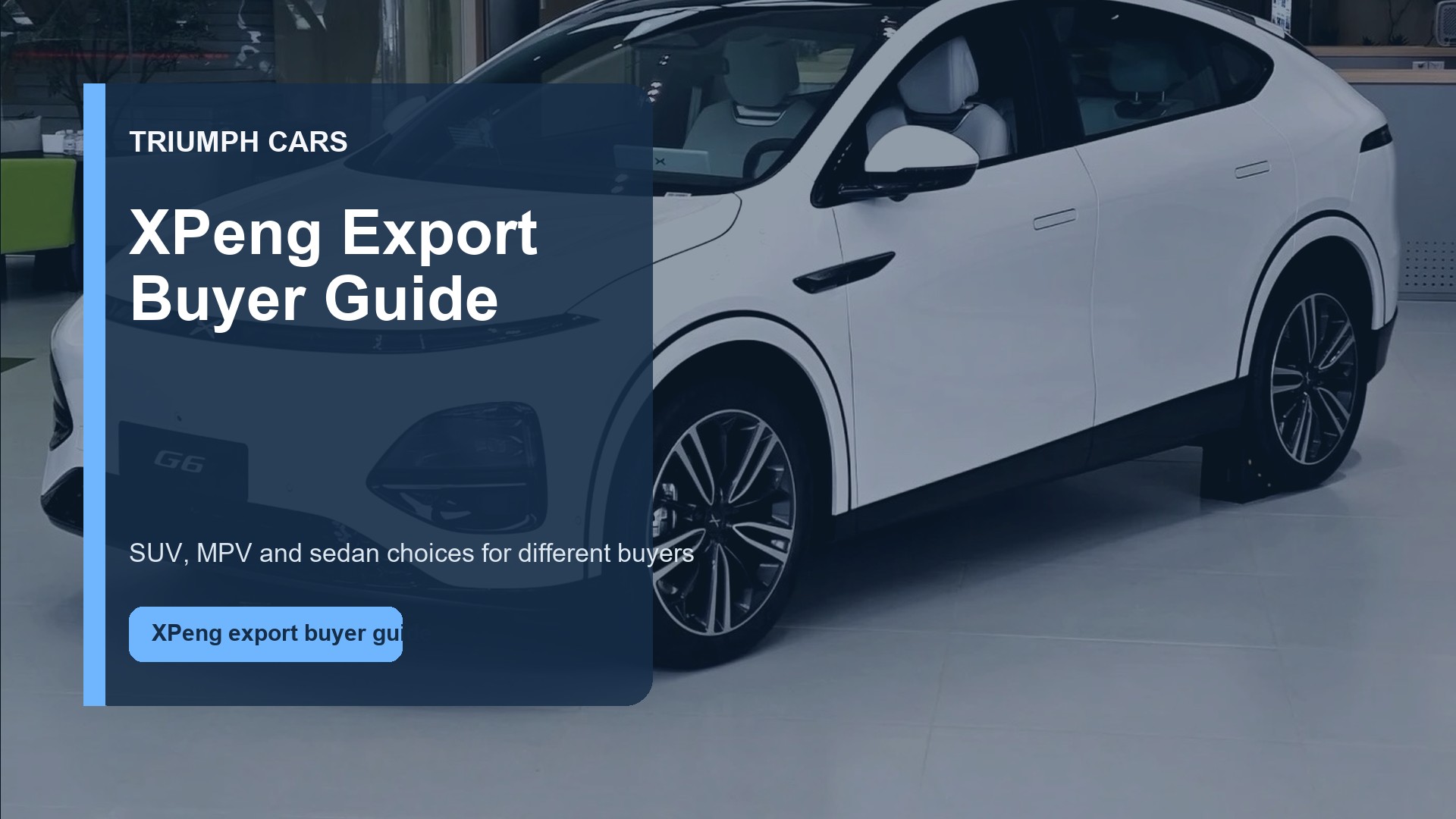
XPeng appeals to buyers who care about cabin technology, smart driving features and modern EV design. Triumph Cars can help compare XPeng G6, XPeng X9 and XPeng Mona M03 before export.
Match XPeng Models To Real Buyers
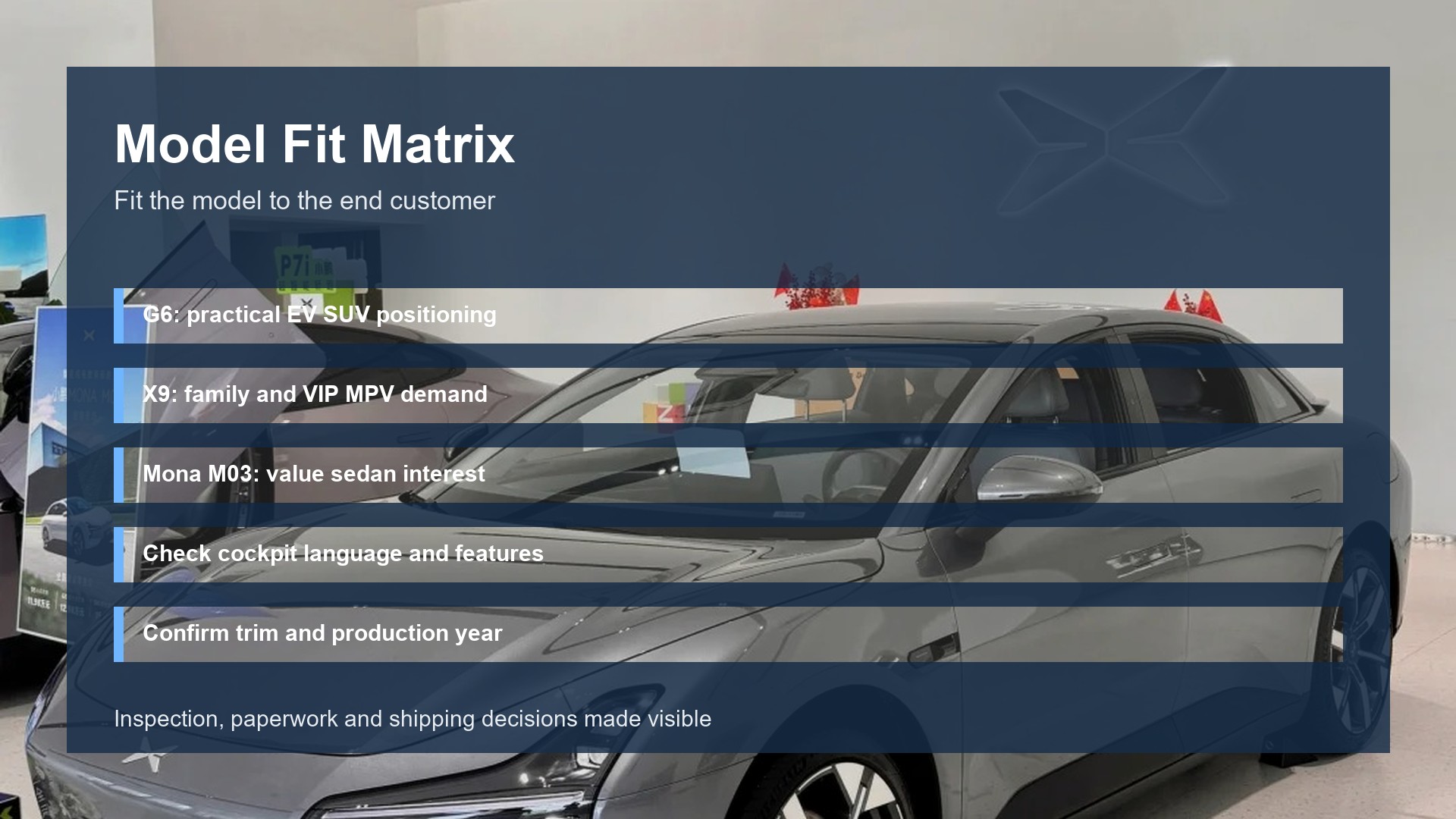
The G6 is the broadest choice for customers who want a modern EV SUV. The X9 is very different: it is a large MPV for family, executive transport or VIP shuttle use. Mona M03 is more value-oriented and can be attractive where customers want a newer sedan concept at a sharper budget.
| XPeng Model | Primary Use Case | Key Question |
|---|---|---|
| XPeng G6 | EV SUV buyers who want technology and practicality | Does the destination market support expected charging and software use? |
| XPeng X9 | Family MPV, business transport, premium passenger use | Will import taxes and parking conditions suit a large MPV? |
| XPeng Mona M03 | Value sedan buyers and dealer showroom traffic | Is the trim and production year clearly documented? |
Technology Features Need Practical Verification
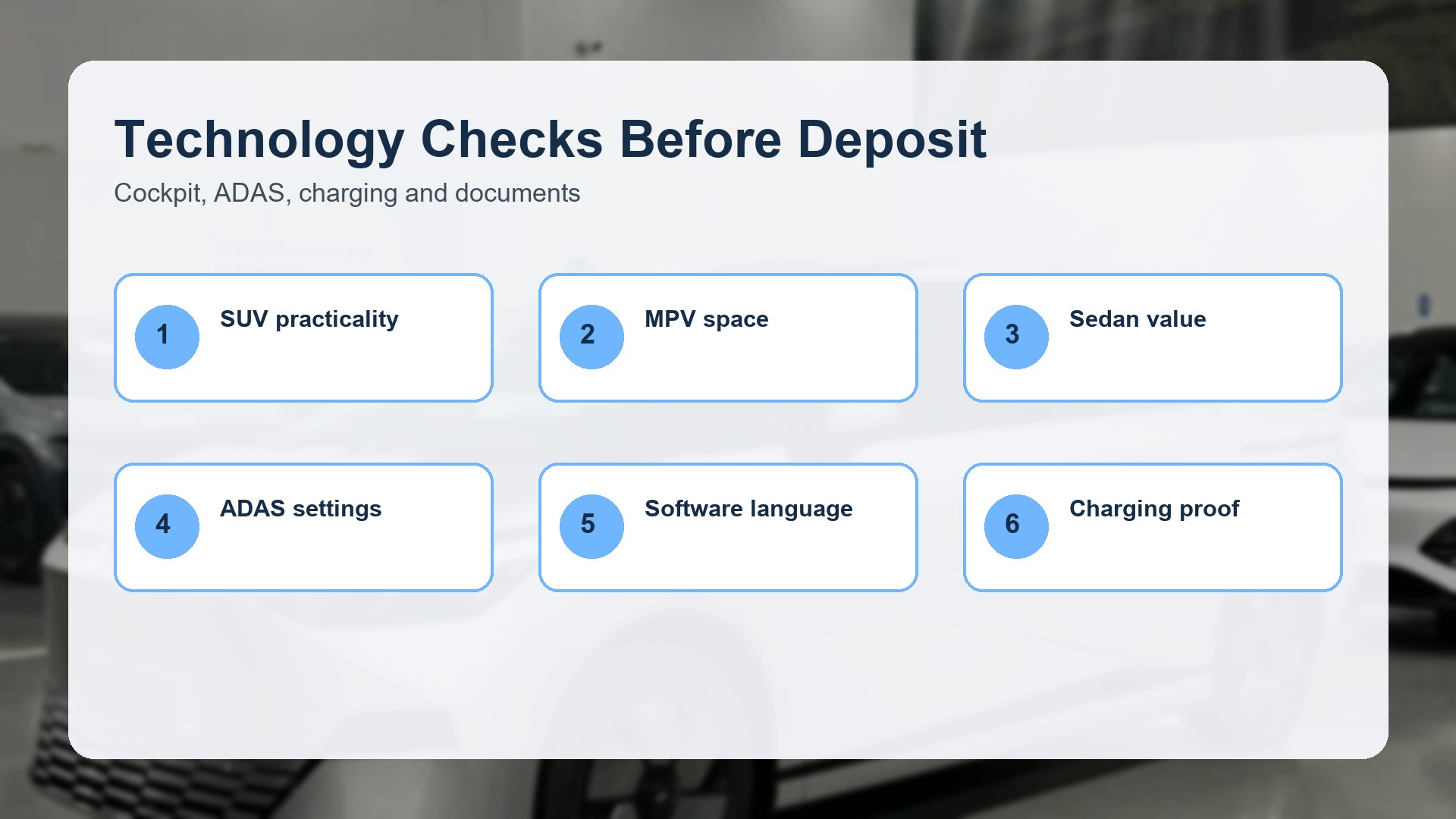
Smart cockpit and driver-assistance features can be a selling point, but they should be checked before payment. Ask for video of the main screen, language options, dashboard warning lights, camera views, charging screen and key functions. Do not assume all connected features will work outside China.
Buyers can send desired functions to Triumph Cars in advance, such as seat layout, screen language, charging accessories, paint color and delivery timeline.
Inspection Priorities For XPeng Vehicles
Exterior and cabin
Check wheels, sensors, cameras, glass, seat movement, sliding doors for X9, trunk operation and any repair marks. For MPVs, inspect rear-seat functions carefully because passenger comfort is a major part of the value.
Battery and charging
Request charging-port photos, dashboard range display, state-of-charge information and any available battery report. Used vehicles also need underbody review because battery-pack exposure is an expensive risk.
Who Should Avoid XPeng Export Purchases
XPeng may not be the right choice for buyers who need simple mechanical servicing in markets with limited EV diagnostic support. It is also not ideal for customers who expect every connected feature or app service to behave exactly like a local-market vehicle.
For simpler maintenance expectations, some buyers compare Honda CR-V, Used Haval H6 or other gasoline/SUV listings before deciding.
Related Internal Links
Review all vehicle listings, China car export services, custom car upgrades, About Triumph Cars, Tesla Model Y and Zeekr X.
XPeng Technology Should Be Sold Carefully
XPeng vehicles are attractive because they feel modern, but export buyers should present technology features responsibly. Driver-assistance, cameras, voice controls and connected services may depend on market, software version or local network conditions. The safer approach is to verify what is visible and usable before export, then describe the vehicle based on confirmed functions instead of brochure assumptions.
For the G6, buyers usually ask about SUV practicality, charging and cockpit experience. For the X9, they ask about passenger comfort, sliding-door operation, rear-seat features and luggage use. For Mona M03, the value question becomes more important: does the vehicle offer enough design, range and equipment to justify importing it instead of a more familiar model?
Video Evidence Is Worth Requesting
For smart EVs, still photos are not enough. Ask for short videos showing screen start-up, dashboard status, camera display, door operation, seat movement, trunk function and charging-port access. The video does not need to be cinematic; it needs to be honest. A simple unedited walkaround often tells the buyer more than a polished marketing clip.
If the destination market has uncertain software support, treat the vehicle as a hardware purchase first. Confirm the cabin, battery, body and documents. Then treat connected services as a bonus only when they can be verified. This keeps customer expectations realistic and protects the dealer from overselling features that may not work outside China.
XPeng Export Risk Control
XPeng buyers often ask more technology questions than basic economy-car buyers. That means the sourcing file must answer technology questions early. Confirm screen operation, language settings, key count, camera function, parking sensors, charging accessories and whether any warning lights appear. If the buyer expects a particular driver-assistance function, ask for evidence rather than relying on trim names alone.
The X9 deserves special attention because MPV buyers care about passenger experience. Check sliding doors, rear seats, air-conditioning, access height, luggage space and all cabin functions. A small defect in the rear cabin can matter more than an exterior scratch because the X9’s value is strongly tied to passenger comfort. For the G6, the buyer may care more about SUV practicality, range expectations and charging. For Mona M03, the focus is value, design and whether the vehicle can be positioned clearly against other compact sedans.
Export buyers should also decide how they will describe connected services after arrival. If an app, map or voice feature is uncertain outside China, describe it cautiously. A realistic sales description builds more trust than a long list of features that cannot be verified in the destination market.
FAQ
Is XPeng X9 suitable for private family import?
It can be, if the buyer accepts MPV size, local parking conditions and import rules. It is best for customers who value passenger comfort and cabin space.
What should I verify on XPeng software before export?
Check screen language, navigation expectations, camera functions, warning lights, app dependency and whether the destination market can support daily operation.
Can Triumph Cars compare XPeng with BYD or Zeekr?
Yes. A comparison can include size, budget, customer profile, inspection priorities and export paperwork for several brands.
Author Note
Author: Triumph Cars editorial team. The article is written for importers, dealers and private buyers comparing China-sourced vehicles. Final import eligibility, taxes, safety compliance and charging rules should always be checked with local authorities before payment or shipment.