














Updated: July 10, 2026 | Reviewed by: Triumph Cars vehicle sourcing team
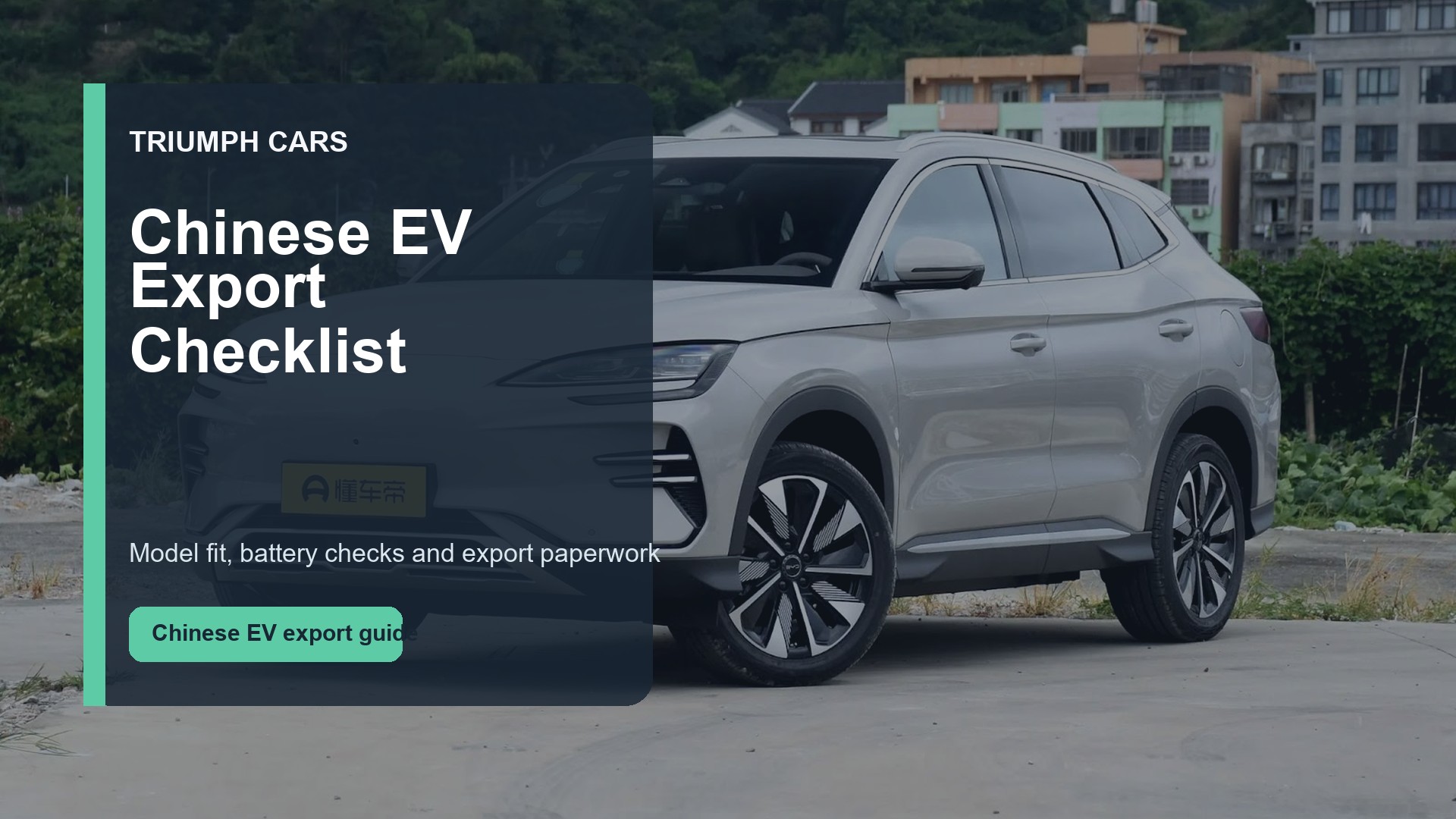
If you are comparing Chinese EVs from overseas, start with a buying process, not a model name. Triumph Cars helps buyers review available vehicles, verify paperwork and move from quotation to shipment with fewer blind spots.
Start With The Import Market, Not The Car
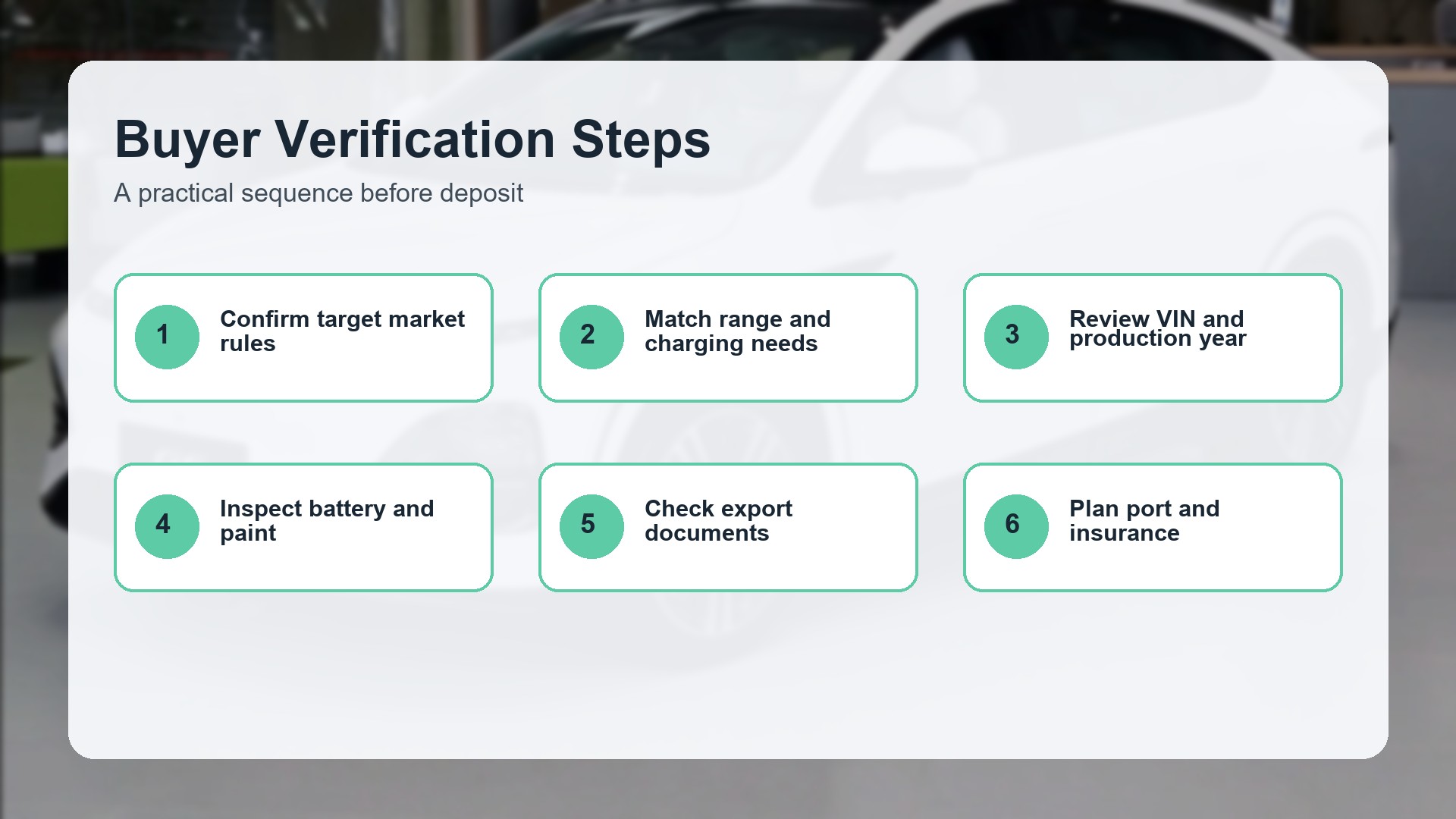
A Chinese EV can look perfect online and still be the wrong choice if the destination market has connector, homologation, registration or warranty restrictions. Before choosing a BYD Song PLUS EV, XPeng G6 or Zeekr 007, list the country, steering preference, charging standard, intended usage and any age or documentation limits.
This is especially important for buyers importing their first EV. Battery size, usable range, DC fast-charging compatibility, software language, map services and spare-parts access can matter more than a headline price.
| Checkpoint | Why It Matters | What To Ask |
|---|---|---|
| Charging connector | Avoids local charging mismatch | Port type, adapter plan, charging cable |
| Battery condition | Protects long-term value | Mileage, health report, warranty status |
| Export documents | Prevents port delays | Invoice, certificate, deregistration where needed |
| Software language | Improves daily usability | Menu language, app dependency, OTA limits |
Build A Shortlist With Real Operating Scenarios
For family use, cabin access, rear-seat comfort, luggage depth and tire replacement cost may outweigh acceleration figures. For a ride-hailing or dealer stock plan, predictable trim levels, strong resale recognition and simple charging support usually matter more.
The Triumph Cars export team normally asks buyers for budget, market, delivery city, preferred brands and how the vehicle will be used. A clean brief makes the quotation more accurate and reduces the risk of comparing different trims as if they were the same car.
Inspection Should Cover More Than Exterior Photos
Battery and high-voltage checks
Ask for mileage, dashboard warnings, charging history where available and clear photos of the charging port. For used EVs, request underbody photos because battery-pack damage is not always visible from normal exterior angles.
Body, tire and cabin checks
Look for repaint marks, uneven panel gaps, tire DOT dates, wheel rash, water stains, seat wear and missing accessories. A good inspection report should show defects clearly enough for a buyer to make a yes/no decision before shipment.
Documents, Payment And Shipping Sequence
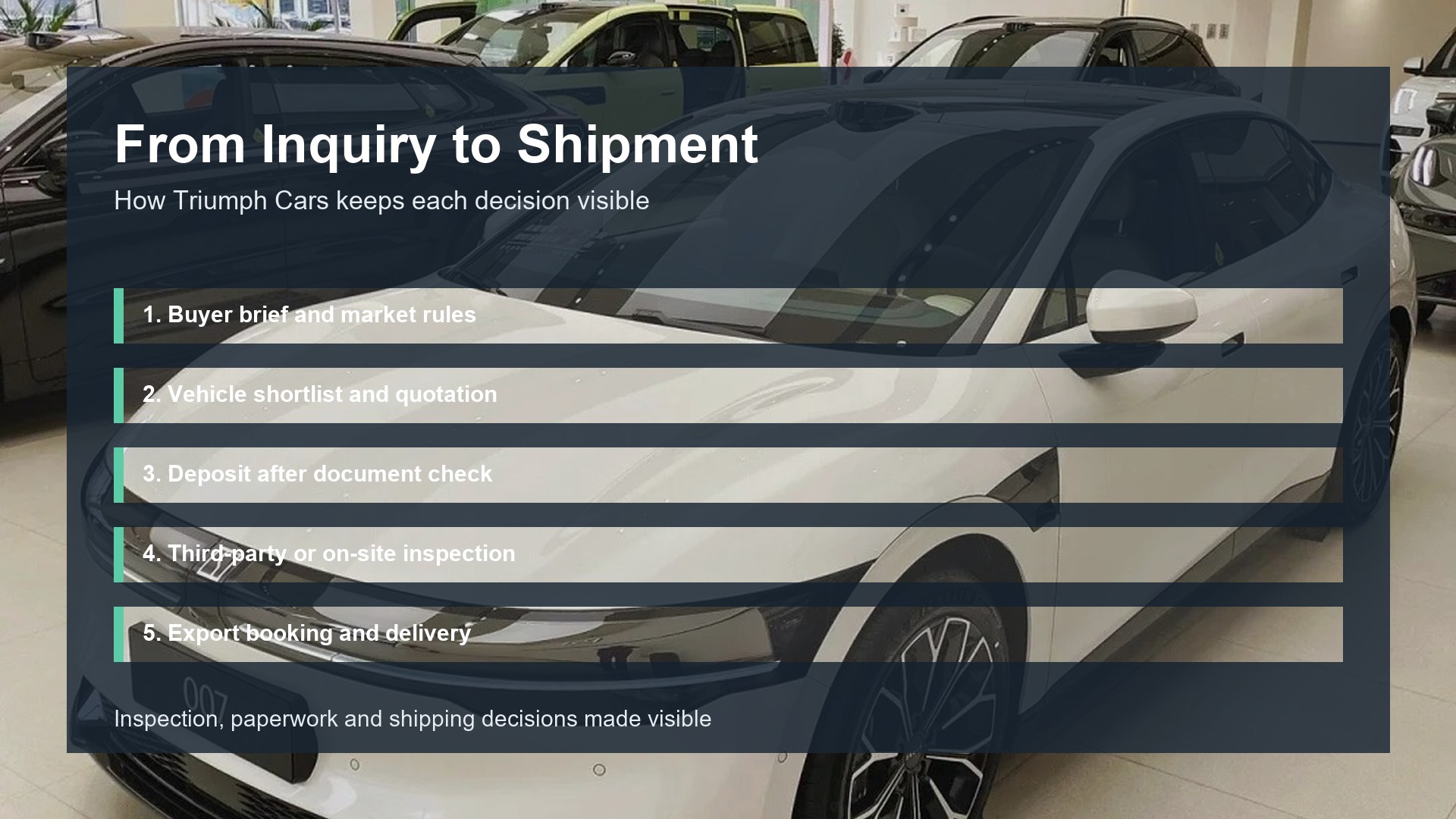
Do not treat payment and export booking as separate problems. The safest sequence is to confirm the vehicle, verify documents, agree inspection criteria, then arrange payment and shipment. Buyers can contact Triumph Cars with the target port, preferred delivery timeline and any customs broker requirements.
This article is not a substitute for local import approval. It is best for importers, dealers and private buyers who already know their destination rules and need China-side sourcing support. It is not suitable for buyers who expect a vehicle to be legal in every country without checking local compliance first.
Internal Links For Next Research
Useful next pages include China car export services, custom upgrades before export, BYD Yuan PLUS, Tesla Model Y and all listed vehicles.
Costing And Ownership Planning
A useful EV quotation should separate the vehicle price from inland transport, inspection, export handling, accessories, ocean freight and destination-side costs. If all costs are shown as one vague number, it becomes difficult to compare suppliers or explain the purchase internally. For dealers, this also affects retail pricing because a small difference in freight, insurance or port handling can erase the margin on a compact EV.
Ownership planning should include charging access, tire replacement, brake service, cabin filters, software language, spare key availability and whether the destination market has technicians who can diagnose high-voltage vehicles. A buyer importing a single family EV may care most about daily charging and basic maintenance. A dealer importing multiple units should also think about customer education, spare accessories and what will happen if the first customer asks about warranty limitations.
Red Flags During Supplier Communication
Be cautious when a seller refuses VIN photos, cannot confirm trim, avoids showing dashboard warnings, sends only edited showroom pictures or pushes for full payment before document review. Another red flag is a quotation that changes after the buyer asks for export paperwork. Serious suppliers understand that international buyers need evidence before payment, especially when the car will leave China and cannot be inspected easily after shipment.
For a smoother process, keep one shared checklist for all parties: model, trim, color, VIN, mileage, battery or engine status, document status, inspection requirements, payment stage and shipping route. This turns the purchase into a controlled project rather than a chain of chat messages.
How To Brief A Sourcing Team
A strong buyer brief is short but specific. Include the destination country, preferred models, budget range, new or used preference, acceptable mileage, color restrictions, steering preference, charging expectations, delivery port and any documents your customs broker has requested. If you already have supplier screenshots or links, send them together so the sourcing team can compare whether the quoted vehicles are truly equivalent.
For EVs, add daily driving distance, charging environment and whether the buyer expects app-based services. A private buyer who can charge at home may accept a different vehicle from a dealer selling to apartment residents who depend on public charging. This is why Triumph Cars treats vehicle selection and import planning as one workflow. A model that looks strong in China must still fit the road, rules and service reality in the buyer’s market.
After the brief is confirmed, keep communication organized by stage: shortlist, quotation, inspection, payment, export documents, shipment and arrival handover. This keeps the project calm when several people are involved, and it gives the buyer a record of why each decision was made.
FAQ
Can Triumph Cars help with both new and used Chinese EVs?
Yes. The process can cover new EVs and used EVs, but the inspection focus is different. Used EVs need stronger checks on mileage, tires, repaint signs and battery condition.
Should I choose the cheapest EV quotation?
Not automatically. A low price can hide trim differences, missing documents, accident history or weak shipping coordination. Compare the full landed process, not only the car price.
How many photos should I request before shipment?
For a serious purchase, ask for exterior, interior, VIN, odometer, charging port, tires, underbody and defect close-ups. More photos reduce ambiguity before payment.
Author Note
Author: Triumph Cars editorial team. The article is written for importers, dealers and private buyers comparing China-sourced vehicles. Final import eligibility, taxes, safety compliance and charging rules should always be checked with local authorities before payment or shipment.