














Updated: July 10, 2026 | Reviewed by: Triumph Cars vehicle sourcing team
Some buyers want the vehicle to arrive ready for showroom display or personal use. Triumph Cars has a dedicated page for custom upgrades and modification, and upgrade planning should happen before the vehicle is shipped.
Upgrade Only What The Buyer Actually Values
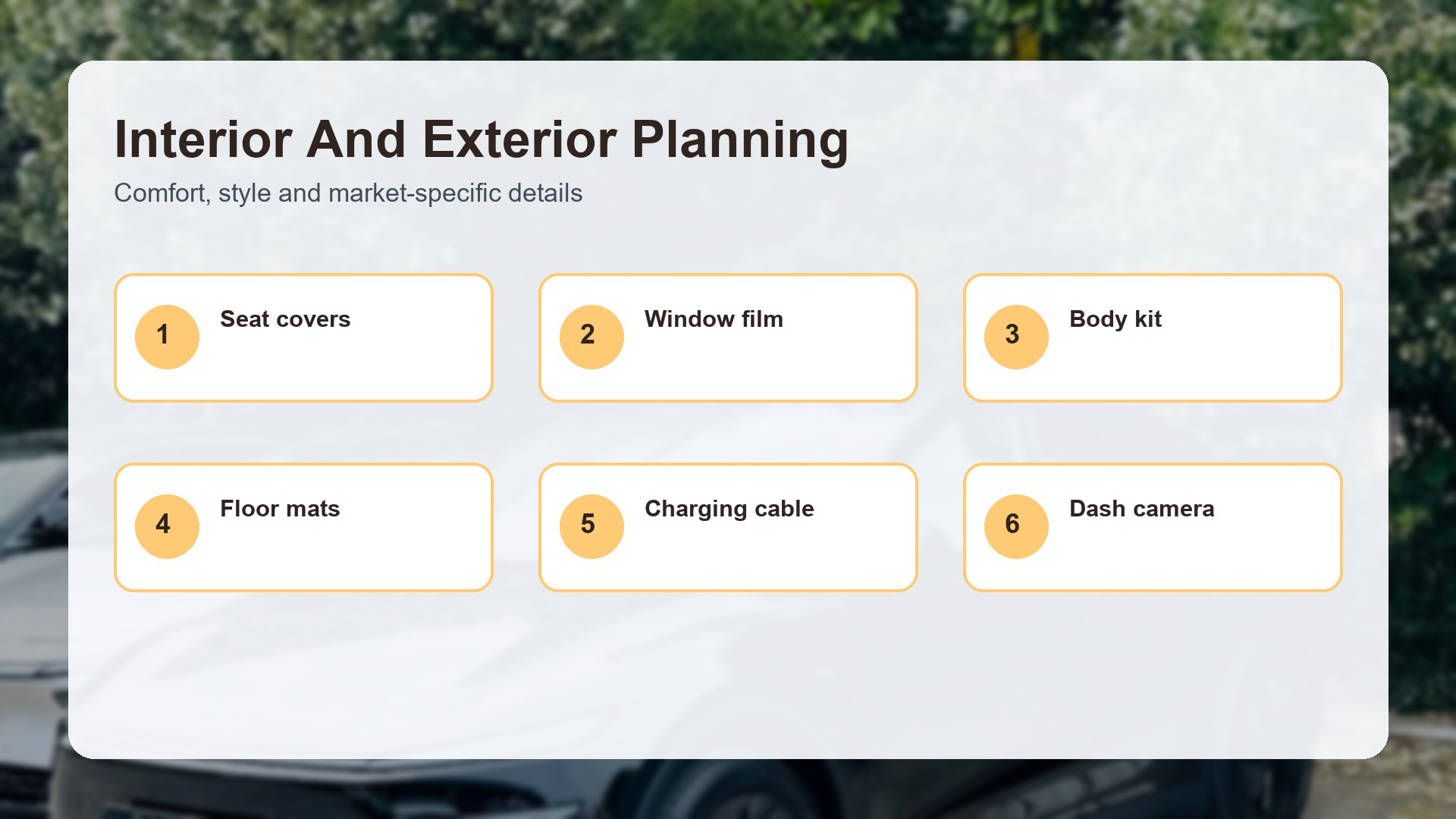
Good upgrades solve a real market need: seat protection for family SUVs, window film in hot climates, cargo mats for fleet cars, dash cameras for commercial use, or simple exterior styling for showroom appeal. Random accessories can add cost without improving resale.
For higher-value models such as Tesla Model Y, XPeng X9 or Li Auto L6, keep upgrades tasteful and reversible unless the buyer has a clear specification.
Interior, Exterior And Accessory Checks
Interior upgrades should not block airbags, seat controls, seat ventilation, ISOFIX points or charging ports. Exterior upgrades should not interfere with sensors, cameras, radar, lighting or ground clearance. The installer should provide photos before and after installation.
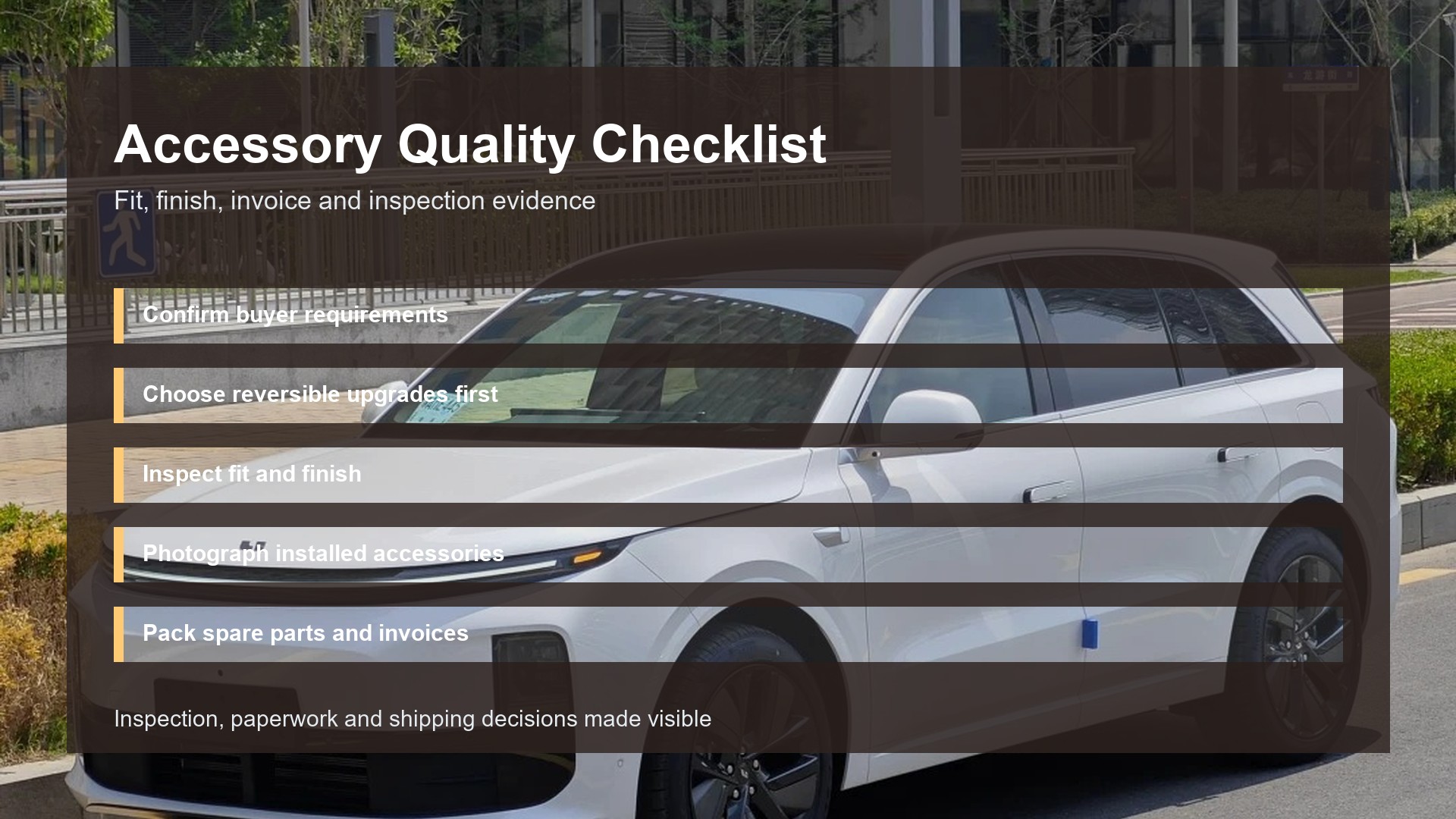
Accessories should be packed, labelled and photographed. If a part is installed, the buyer should still receive proof of brand, quantity and fitment condition.
Inspection After Modification
A vehicle should be inspected again after modifications. Check panel alignment, adhesive residue, wiring, dashboard warnings, camera function, door seals and whether all accessories are present. Small mistakes are easier to fix in China than after arrival.
Buyer feedback pattern: showroom buyers care less about how many accessories were added and more about whether the finished car looks clean, consistent and ready to present.
When Upgrades Are A Bad Idea
Avoid upgrades if the destination country has strict inspection rules, if the buyer is unsure about taste, or if modifications could affect warranty or registration. In those cases, keep the vehicle close to factory condition and ship accessories separately when appropriate.
For a clean plan, share the target vehicle from available listings, the destination market and preferred accessories through the contact page.
Internal Links For Planning
Review China car export services, About Triumph Cars, BYD Yuan PLUS, Leapmotor C10, Zeekr X and custom upgrades page.
Upgrade Quality Control Before Shipment
Upgrades should be treated like a small production job. Define the scope, approve materials, inspect installation and keep records. For seat covers, check stitching, fit and whether airbags or seat functions are blocked. For window film, check visibility, edge finish and local rules. For floor mats, check pedal clearance. For dash cameras, confirm wiring safety and whether the camera creates any warning messages.
Exterior accessories need even more care because they can affect sensors, cameras, ground clearance or lighting. A body kit that looks good in photos can become a problem if it scrapes during loading or fails local inspection. When in doubt, choose reversible accessories and avoid modifications that change safety-related systems.
How To Present Upgrades To The Final Buyer
For dealer sales, upgrades should be documented with before-and-after photos, installed close-ups and a simple accessory list. This helps the salesperson explain value without exaggerating. For private buyers, documentation helps confirm that the car they receive matches the agreed specification.
Upgrades are most useful when they solve destination-market needs: sun protection in hot climates, cargo protection for family SUVs, winter mats in cold regions, or simple styling details for showroom display. They are least useful when added only because they look impressive in a supplier chat.
Upgrade Planning Table
| Upgrade | Good Use Case | Quality Check |
|---|---|---|
| Window film | Hot climates and privacy demand | Local legality, visibility and edge finish |
| Seat or floor protection | Family use, fleet use, showroom cleanliness | Fit, airbag clearance and pedal safety |
| Exterior styling | Dealer display or buyer preference | Sensor clearance, paint match and loading risk |
Upgrade Budget And Timing Control
Upgrades should have a separate budget and timeline. Do not hide upgrade cost inside the vehicle price, because that makes it harder to judge whether the accessory work is worth doing. A clean quotation should show accessory name, quantity, installation cost, expected completion time and whether the work affects shipment timing.
Timing matters because a vehicle may need a final inspection after installation. If window film, seat covers, floor mats, camera wiring or exterior trim are added, the buyer should receive updated photos before the car is delivered to the port. A rushed upgrade right before loading increases the chance of defects, missing parts or unresolved warning lights.
For dealers, keep upgrades consistent across similar vehicles. If three SUVs arrive with different floor mats, different camera wiring and different accessory quality, the showroom looks less professional. A simple standard accessory package can be easier to sell and easier to inspect.
Final Upgrade Note
The safest upgrades are visible, reversible and easy to inspect. If an accessory improves comfort, protects the cabin or helps the vehicle fit the destination climate, it may be worth doing before export. If it changes safety systems, blocks sensors or creates compliance uncertainty, keep the vehicle closer to factory condition and protect the shipment timeline.
FAQ
Should upgrades be installed before or after export?
If the buyer wants China-side sourcing and inspection control, install before export. If local compliance or taste is uncertain, ship the car closer to factory condition.
Can exterior upgrades affect sensors?
Yes. Body kits, film or accessories can interfere with cameras, radar, parking sensors or lighting. Function checks are needed after installation.
What upgrade proof should I request?
Ask for invoices, installed photos, close-ups, accessory packing photos and a final walkaround video before shipment.
Author Note
Author: Triumph Cars editorial team. The article is written for importers, dealers and private buyers comparing China-sourced vehicles. Final import eligibility, taxes, safety compliance and charging rules should always be checked with local authorities before payment or shipment.