














Updated: July 10, 2026 | Reviewed by: Triumph Cars vehicle sourcing team
Used vehicles can offer strong value, but they need better evidence than new inventory. Triumph Cars can help buyers compare listings such as Used BYD Han DM Hybrid, Used Honda CR-V and Used Haval H6 with a clear inspection checklist.

Start With Identity And Mileage
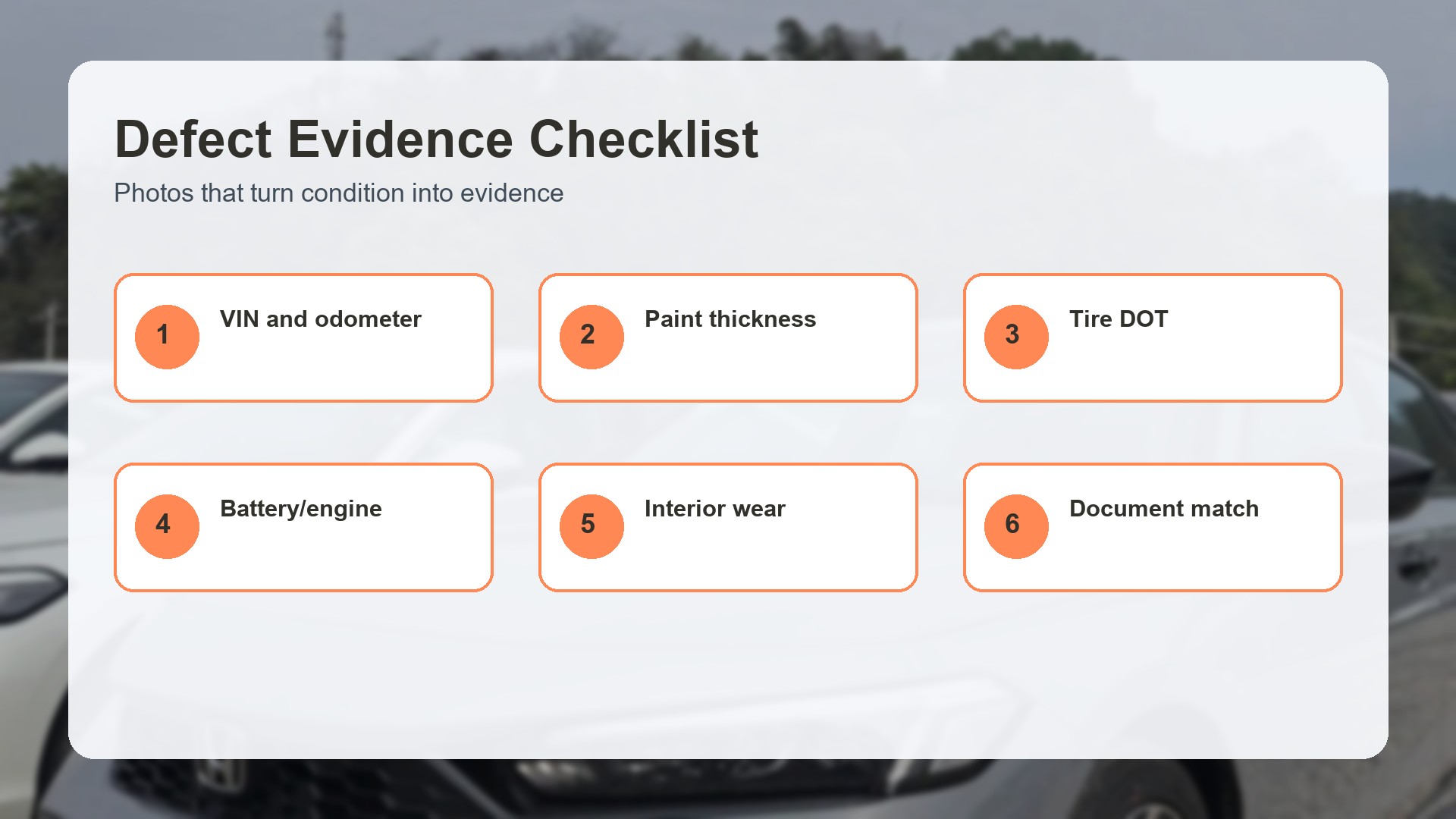
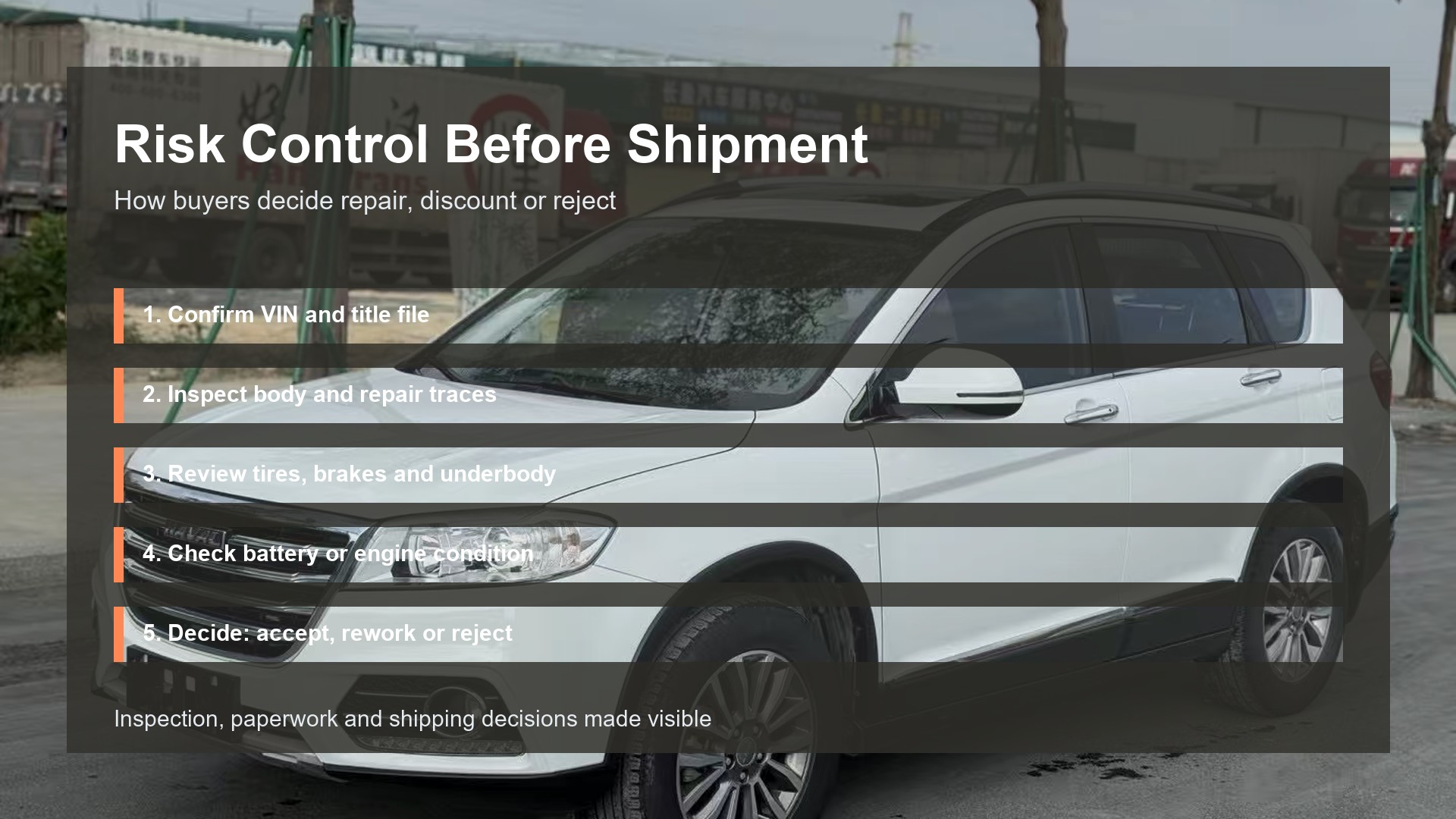
Before negotiating price, confirm the VIN, odometer reading, production year, registration status and whether the vehicle can be legally exported. If the seller cannot provide clear VIN and dashboard photos, pause the deal.
| Area | Photo Evidence Needed | Risk If Missing |
|---|---|---|
| VIN and documents | VIN plate, dashboard VIN, invoice or ownership file | Wrong vehicle, export delay or title dispute |
| Mileage | Odometer and service clues | Overpriced vehicle or hidden commercial use |
| Body | All panels, bumpers, roof, glass and close-ups | Accident or repaint risk |
| Undercarriage | Chassis, battery pack or oil leakage area | Expensive repair after arrival |
Mechanical, Battery And Road-Use Checks
For gasoline and hybrid vehicles, check cold-start behavior, idle stability, oil leakage, coolant condition, gearbox response and warning lights. For EVs, focus on battery condition, charging port, dashboard warnings, tire wear and any underbody impact marks.
If a buyer is unsure whether to choose used or new, compare a used listing with new models such as BYD Dolphin, Li Auto L6 or Leapmotor C10. Sometimes a newer EV costs more upfront but reduces inspection uncertainty.
Negotiating After Defects Are Found
Defects do not automatically kill a deal. Small paint flaws, tire wear or missing accessories can become negotiation points. Structural repairs, flooded interiors, battery-pack damage or document mismatch are different; those can create larger cost and import risk.
Buyer feedback pattern: used-car buyers tend to accept small cosmetic issues when they are shown clearly before payment. They lose trust when the first defect appears only after the vehicle reaches the destination port.
Not Suitable For Every Buyer
Used-car export is not the right path for buyers who need factory warranty, identical trim consistency or zero cosmetic defects. It is better for buyers who understand condition grading and can make decisions from inspection evidence.
To plan a careful purchase, send your target model, budget and destination to contact Triumph Cars. The team can help organize quotation comparison, inspection photos and shipment planning.
Useful Internal Links
Continue with all available vehicles, China car export services, About Triumph Cars, custom upgrades, Tesla Model Y and BYD Song PLUS EV.
Condition Grading For Used Export Vehicles
Used vehicles should be graded in plain language before shipment. A simple grading system can separate cosmetic flaws, wear items, functional problems and deal-breaking risks. Cosmetic flaws include small scratches, stone chips or light interior wear. Wear items include tires, brake pads, wipers and fluids. Functional problems include warning lights, abnormal noises or failed electronics. Deal-breaking risks include structural damage, flood signs, document mismatch or serious battery-pack damage.
This structure helps buyers negotiate without emotion. A small scratch may justify a minor discount or rework. A dashboard warning light requires diagnosis before shipment. A VIN or document mismatch should normally stop the deal until the file is corrected.
How To Handle Repair Before Shipment
Repairs should be photographed before and after. If paintwork is done, request close-ups under natural light. If tires are replaced, confirm tire size, brand and DOT date. If accessories are replaced, ask for packing photos and installation evidence. The goal is not to make the vehicle sound perfect; it is to make the condition transparent enough that the buyer can price it honestly.
For dealers, transparency can become a selling advantage. A customer who sees inspection records, repair notes and shipment photos is more likely to trust the vehicle. A customer who discovers hidden problems after arrival may distrust the entire sourcing channel, even if the purchase price was low.
Used-Car Maintenance File
A used-car buyer should request a maintenance-oriented file, not only a cosmetic photo set. For gasoline vehicles, that means engine bay, oil or leakage areas, coolant area, exhaust, tires, brakes, dashboard warning lights and a short cold-start or idle video when possible. For hybrids and EVs, the file should include battery-related displays, charging-port condition, dashboard warnings and underbody photos.
Some used vehicles are excellent value because the previous owner used them lightly. Others look clean in photos but carry commercial mileage, hidden repair or weak document history. The inspection file helps separate those cases. A buyer should be ready to reject a car if the file is incomplete or if the seller keeps changing the explanation after defects are found.
For dealers, the maintenance file can become part of the sales package. It does not need to promise perfection. It should show that the car was checked responsibly before export. Customers buying used vehicles usually understand normal wear; what they dislike is surprise.
Final Used-Car Buying Note
Before paying the balance on a used vehicle, ask one final practical question: would the inspection file let a person who has never seen the car understand its condition honestly? If the answer is yes, the buyer can negotiate with confidence. If the answer is no, request missing photos or pause the order. Used-car value comes from price plus transparency; without transparency, even a cheap vehicle can become expensive after arrival.
FAQ
Are used cars from China suitable for first-time importers?
They can be, but first-time importers should use a stricter inspection process and confirm local import eligibility before paying a deposit.
What is the biggest used-car export risk?
The biggest risks are document mismatch, accident history, battery or drivetrain problems and defects that were not shown clearly before payment.
Can small defects be fixed before export?
Often yes. Cosmetic rework, accessory replacement and basic preparation can sometimes be arranged before shipping, but cost and timing should be agreed in writing.
Author Note
Author: Triumph Cars editorial team. The article is written for importers, dealers and private buyers comparing China-sourced vehicles. Final import eligibility, taxes, safety compliance and charging rules should always be checked with local authorities before payment or shipment.